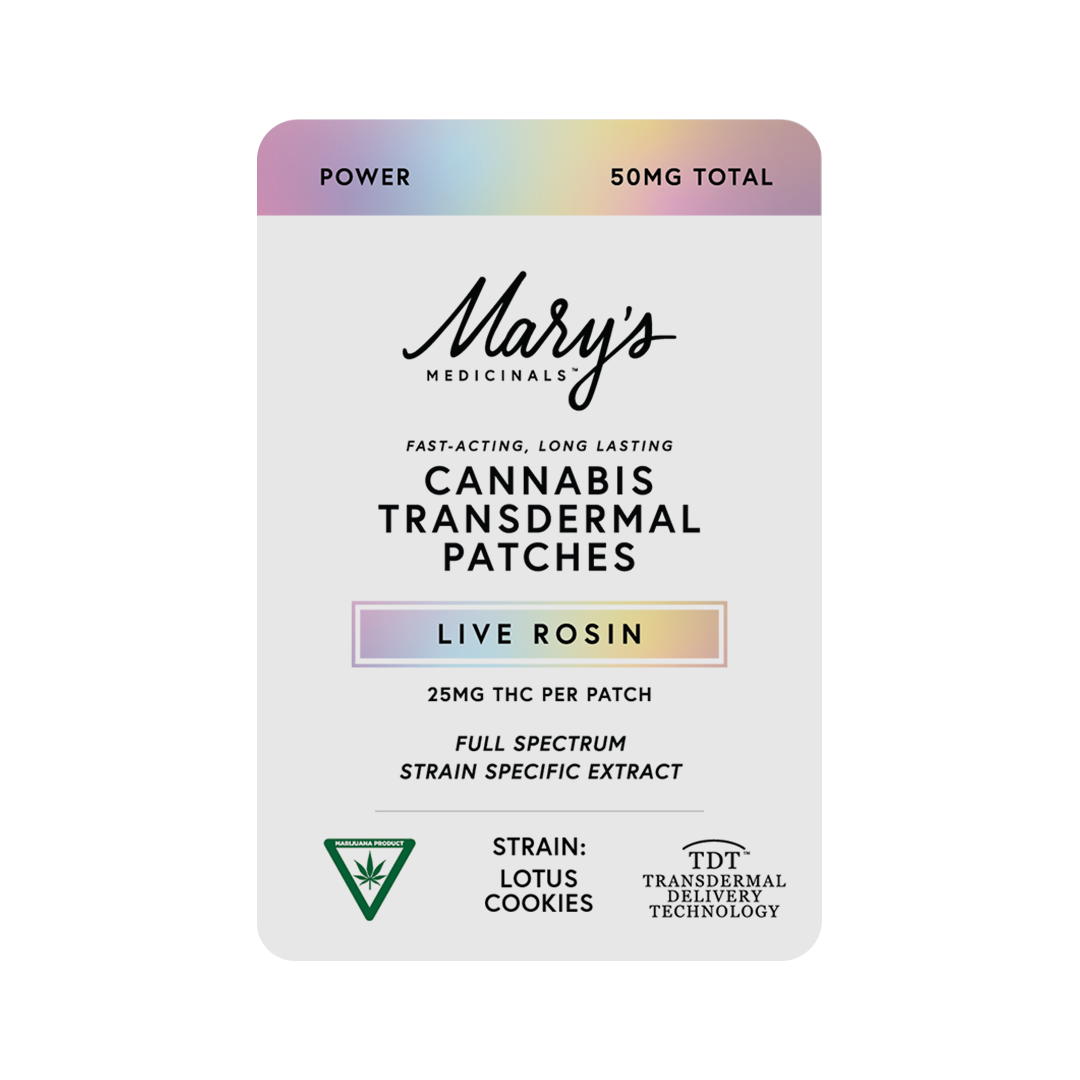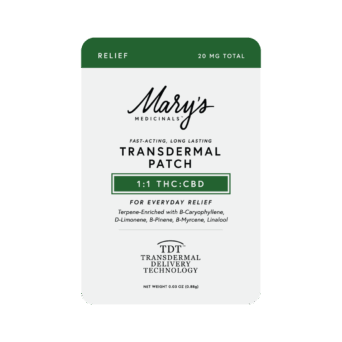
THC patches are one of the simplest ways to try cannabis without smoke, without vapor, and without doing edible math in your head at 9 p.m. while you wait and wonder. If you are staring at a dispensary menu and thinking, “Okay, but what does transdermal actually mean?” you are in good company. You can absolutely lean on a budtender, but you will get way better guidance when you walk up with a few clear questions and a quick sense of what you want out of the day.
We are Mary’s Medicinals, and transdermal delivery is our lane. We built our patches to go 7 to 10 layers deep into the skin and into the bloodstream, so the experience is steady and consistent instead of peaky and unpredictable. If you are shopping for a patch for daytime balance, nighttime support, or a cannabinoid-forward option like THCa or CBN, explore our selection of transdermal patches. Think of this as the short list you can keep on your phone and pull up at the counter.
THC patches 101: what “transdermal” means (and why it is not the same as topical)
When you see the word transdermal on THC patches, it is telling you the product is designed for systemic delivery, meaning cannabinoids are formulated to cross the skin barrier and enter circulation. That is a different job than a classic topical, which usually stays closer to the surface and is used for more localized, spot-specific support.
Here is the everyday way to think about it: if you have used a cream and only felt it where you rubbed it in, that is topical territory. With a true transdermal patch, you are signing up for a slower release over time, which is exactly why so many people like patches for long workdays, travel days, and nights when you do not want to keep re-dosing.
How THC patches tend to feel: onset, peak, and how long they can last
Most people choose THC patches because the timing is easier to live with than edibles. In practice, many cannabis patches start to be felt in about 30 to 60 minutes, often reach a peak around 2 to 4 hours, and can last roughly 8 to 12 hours depending on the product and the person. That general window is also reflected in Weedmaps’ guide to cannabis patches.
Because the cannabinoids are delivered through skin and into circulation, the experience often builds gradually. Not fireworks. More like a dimmer switch. If you are the kind of person who likes consistent support rather than a fast spike, that slow-and-steady profile is usually the appeal.
Before you ask anything: two quick things to tell your budtender about THC patches
If you want the conversation to go faster and feel less awkward, start with two sentences:
- Your goal: sleep support, calmer evenings, daytime ease, recovery, staying focused, or simply “I want something subtle.”
- Your THC comfort level: brand new, occasional, or experienced.
Then add any real-life constraints. Do you need to stay clear-headed? Do you want something discreet for work? Are you trying to avoid inhalation completely? Those details matter more than people think, and they help your budtender steer you toward the right cannabinoid mix, dose, and wear time.
10 questions to ask a budtender when you are buying THC patches
-
What cannabinoids are in this patch?
Ask whether it is THC, CBD, THCa, CBN, CBG, or a ratio blend. You are not being picky. You are being smart. Different cannabinoids can feel very different, and you want to match the formula to your reason for buying.
-
Is it a true transdermal patch, or more like a topical patch?
This is the big divider. If you want whole-body, longer wear, and a steadier feel, you are usually looking for a transdermal design that is intended to enter the bloodstream. If your goal is localized support, that is a different kind of product choice.
-
What is the total dose per patch, and can you start with less?
Many patches land somewhere around 10 mg to 20 mg total per patch. If you are new or THC-sensitive, ask whether the patch can be cut to reduce your starting dose and whether the brand is okay with that. If you want to see a concrete example, our Mary’s Medicinals Transdermal Patch (THC Indica) page includes dosing context and customer notes that can help you picture what “starting small” looks like in real life.
-
How long should you wear it, and how long do people usually feel it?
Some patches are designed for a standard day or night. Others are intended for longer wear. Ask for the recommended wear time on the package, plus what the budtender hears most often from customers so you can plan around work, sleep, and driving.
-
Should you expect psychoactive effects from this one?
THC patches can feel psychoactive since THC may enter the bloodstream through transdermal delivery. If you are trying to stay clear-headed, say that plainly and ask what options are more your speed.
-
Where should you place THC patches for the best absorption?
Placement changes the experience more than most first-timers realize. For our patches, we recommend the inner wrist, the top of the foot, or the back of the knee. Those areas tend to have thinner skin and veins closer to the surface. If you want the most discreet spot, the top of the foot is usually the easiest to keep covered. Also rotate your application sites over time, switching left and right wrists and left and right feet.
-
What do you need to do so it sticks well and stays consistent?
You will get better wear time when you apply to clean, fully dry skin with no lotions or oils underneath, and you choose a low-friction spot. If you want a simple routine you can follow every time, use our THC patches skin prep checklist for better adhesion.
-
Can you see the third-party lab testing for this batch?
Ask for the COA, or certificate of analysis. It should confirm cannabinoid content and screen for common contaminants. If the dispensary cannot provide lab testing info, treat that as a reason to choose a different option.
-
Are there terpenes or other ingredients that shape the feel?
Terpenes are responsible for the flavors, aromas, and effects associated with different cannabis profiles. Many patches use terpene infusion to help guide the experience. Also ask about adhesives and added botanicals if your skin is easily irritated.
-
If it feels like too much, can you remove it, and what happens next?
One practical advantage of patches is that you can remove them to stop additional delivery. You cannot rewind what has already absorbed, but removal can help you avoid taking in more than you want. Ask what customers typically report after removal, since that “settling” period can vary.
THC patches shopping cheat sheet: a quick comparison table for the counter
If you are comparing two or three options in real time, you do not need a dissertation. You need a short list. Screenshot this, or jot it down.
| What to compare | Why it matters | What to ask for |
|---|---|---|
| Primary cannabinoid(s) | Shapes the overall experience | THC, CBD, THCa, CBN, CBG, or a ratio blend |
| Total dose per patch | Helps you choose a comfortable starting point | mg per patch and whether it can be cut |
| Onset and duration | Lets you plan your day or night | Typical kick-in window and recommended wear time |
| Placement guidance | Affects absorption and how well it stays on | Recommended application sites and rotation plan |
| COA availability | Verifies potency and basic safety testing | Third-party lab results for the specific batch |
THC patches dosing expectations: how to start low and keep it predictable
If you are new to THC patches, your best move is boring on purpose. Start low, give it time, and do not stack a bunch of other cannabis products on top in the first few hours. A patch can feel subtle early on and then build gradually, which is exactly what you want if you are aiming for control.
If you are coming from edibles, it helps to understand why the experience can feel different. Edibles go through digestion and the liver, which can change timing and intensity from one day to the next. We break that down in our post on first-pass metabolism and edibles vs. transdermal patches.
Everyday reality: water, workouts, storage, and other practical stuff
Ask the simple questions that matter once you leave the store. Is the patch water-resistant or sweat-resistant? Can you shower with it? What does the brand recommend if you work out or spend a lot of time outside?
At Mary’s our patches are water and sweat resistant, not water proof. They’re good to last through your workout or some rain but we do not recommend a lot of water exposure or direct pressure from the shower if you are hoping to keep it on for the full 8 hours. For storage, keep unused patches sealed in their original packaging in a cool, dry place so the adhesive and cannabinoids stay stable. And if you want to feel more confident reading labels at the counter, use our guide to reading patch doses, ratios, and terpenes before your next dispensary run.
FAQ: first-time THC patches questions
Do THC patches get you high?
They can. Because THC patches are designed for transdermal delivery into the bloodstream, psychoactive effects are possible. Many people describe it as smoother and more gradual than inhalation. If you want minimal intoxication, ask your budtender for lower-THC options or cannabinoid ratios that better match that goal.
How long do THC patches take to kick in?
It depends on the product and your body, but many people feel something within about 30 to 60 minutes, with a longer effect window than inhaled cannabis. That timing range is also discussed in Verilife’s overview of THC and CBD patches.
Where is the best place to apply THC patches?
For our patches, we recommend the inner wrist, top of the foot, or back of the knee, and rotating left and right sides over time. Avoid thick-skin areas like the ankle, upper arm, or lower back if you are aiming for optimal absorption.
Can you stop a THC patch if you do not like the feeling?
Yes. You can remove the patch to stop additional delivery. What has already absorbed will still be processed by your body, so the change is not instant, but removal gives you a practical off switch that edibles do not.
What should you look for on lab testing for THC patches?
Ask for a COA that matches the batch you are buying. It should confirm cannabinoid content and show contaminant screening. For broader background on how transdermal cannabis patches are described in patient education, see Cannameds’ transdermal patch explainer.
Conclusion
Buying THC patches for the first time gets a lot easier when you treat the dispensary counter like a quick Q&A. Ask what is in the patch, whether it is truly transdermal, how much is in a full patch, how long it lasts, where to place it, and whether you can see the COA. Then start low and give yourself time to feel the full arc.
If you want a science-backed option built for consistent delivery, take a look at our transdermal line at Mary’s Medicinals and keep these 10 questions handy for your next visit.