Dispensary menu shopping looks easy until you are standing there squinting at tiny numbers: 24% on flower, 10mg on gummies, and a “1:1” that feels like it belongs on a homework sheet. You do not need a chemistry degree to make a smart pick. You just need a quick way to filter the noise and focus on what actually changes your experience.
We use a simple two-part scan when we are helping someone choose: category and mg per dose. Put those together and a menu starts reading more like a roadmap than a wall of stats.
Dispensary menu Step 1: Start with the category, not the numbers
Most dispensary menus follow the same general layout: flower, vapes, edibles, tinctures, concentrates, pre-rolls, and topicals. That organization is not just for browsing. Each category tends to use different units and comes with different timing, so category is the fastest way to get oriented.
Here is the shortcut we want you to keep in your back pocket:
- Flower and vapes are usually listed by THC percentage.
- Edibles, tinctures, capsules, and patches are usually listed in milligrams (mg).
- Topicals can be a mixed bag, because true transdermals and surface-level topicals sometimes get grouped together.
If you want a baseline for how menus are commonly structured, the Joint Commerce dispensary menu guide lays out the usual sections and naming patterns.
Dispensary menu Step 2 Dosage: What THC % means (and what it cannot tell you)
When you see “22% THC” on flower, that number is the lab-reported concentration by dry weight. It is useful, but it is not a guarantee of how strong it will feel for you. Inhalation is affected by things like how you take your hits, your tolerance, and the terpene profile.
Also, try not to compare across categories like it is one universal scale. A 25% flower and a 10mg edible are speaking different languages. Your body processes inhaled cannabinoids differently than cannabinoids that go through digestion, so the experience does not line up one-to-one.
Once you leave flower and vapes, you will usually get a clearer read from mg per serving. That is why we tell people to treat mg as their anchor number for edibles, tinctures, capsules, and patches when the goal is planning and repeatability.
Dispensary menu ratios: CBD:THC is a clue, not the whole story
A CBD:THC ratio tells you the balance between cannabinoids. Common ones you will see are 4:1, 2:1, and 1:1. Ratio products are popular for people who want a more balanced feel than THC alone, since CBD and THC interact with overlapping pathways.
If you like having a reference point for common ratios, the Story Cannabis THC:CBD ratio guide does a nice job describing how shoppers often use them.
Now for the part that saves you from accidental overdoing it: the ratio is not the dose. Two products can both say “10:1” and still be totally different in real life.
- Product A could be 100mg CBD + 10mg THC.
- Product B could be 20mg CBD + 2mg THC.
Same ratio label. Different commitment. So whenever you see a ratio, pair it with the actual mg per serving. That “ratio plus mg” habit is exactly why many ratio shoppers get better results over time.
mg Math you will actually use (edibles, tinctures, capsules)
If you remember one thing, make it this: shop by mg per dose, not mg per package.
A chocolate bar might say 100mg total, but if it is 10 squares, you are looking at 10mg per piece. Gummies can work the same way. If you are newer, that “per piece” number matters more than the big total on the front.
For many first-time or lower-tolerance shoppers, 2.5 to 5mg THC per serving is a common starting range for edibles. With tinctures, look for mg per mL, then compare that to how many mL you plan to take. If you want a deeper breakdown of why the same mg can land differently depending on format and person, our guide on cannabis dosing and why cannabis hits everyone differently walks through the basics in plain language.
Dispensary menu “topicals” vs transdermals: the detail that changes everything
Menus often use “topical” as a catch-all. That is where people get tripped up, because a cream or gel and a true transdermal patch are not built to do the same job.
- Topicals are generally meant for localized, surface-level support.
- Transdermal patches are engineered to deliver cannabinoids through multiple skin layers and into circulation.
In other words, a transdermal patch is designed for systemic absorption, which can change both the feel and how you think about dosing.
Use MMJ Health guide to THC patches as a Third-party educator, they explain this distinction clearly, including why transdermal THC patches can be psychoactive while many standard topicals are not.
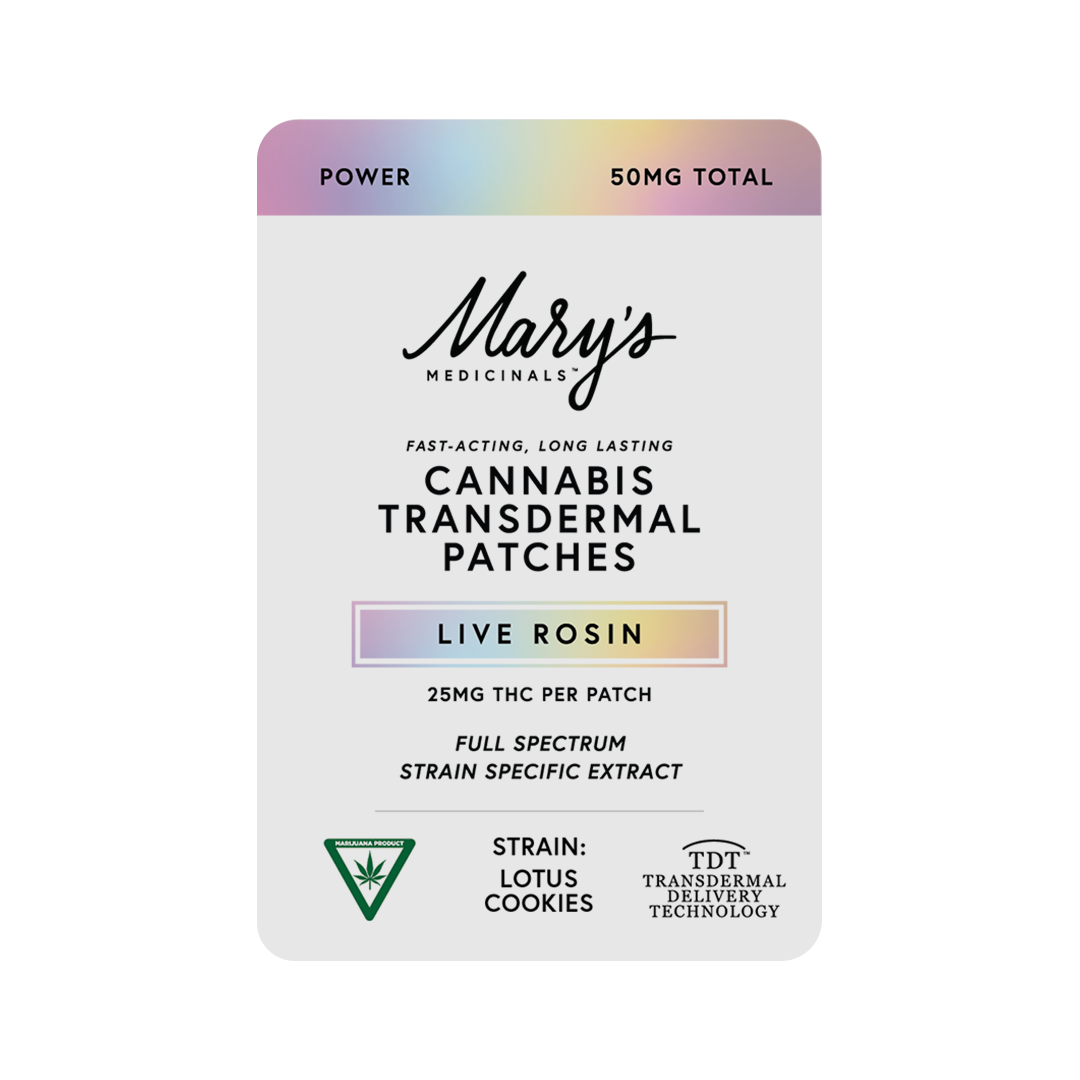
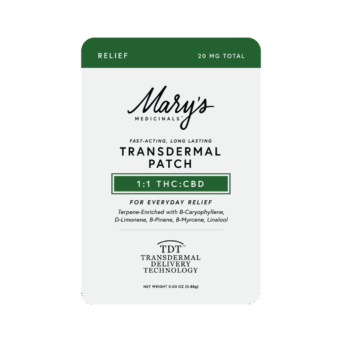
Transdermal delivery is core to what we do at Mary’s Medicinals. Our patches are designed to go 7 to 10 layers deep, and they are formulated for high bioavailability. Bioavailability is the proportion of a substance that enters circulation and has an active effect. Higher bioavailability can mean you need less product to reach the same desired effect.
If you want to compare formats side by side, you can browse our Transdermal & Topical Products overview and see how we think about controlled release, discreet routines, and accurate dosing.
How to read THC patches on a dispensary menu (mg, wear time, onset)
When you are looking at THC patches, the mg number is typically the total cannabinoid content intended to be released over the wear period, not an instant “all at once” dose. Patches are usually chosen by people who prefer steadier delivery and fewer spikes.
Placement matters more than most people expect. For the best chance at consistent absorption, we recommend applying patches to the inner wrist, top of the foot, or back of the knee, where skin is thinner and veins are closer to the surface. For discretion, the top of the foot is a fan favorite. Rotate left and right sides over time so your skin gets a break.
If you want to get specific about timing and what can shift your personal onset and duration, our guide THC Patches: How Long They Take to Work and Last digs into the practical details.
Fast ratio shortcuts (including the so-called “golden ratio”)
If ratios still feel abstract, try this simple way to think about them:
- CBD-forward ratios tend to feel gentler and less intoxicating.
- 1:1 tends to feel more balanced and noticeable for many people.
You might hear people call 1:1 the “golden ratio,” especially in patch form, since gradual delivery can feel steadier than a quick spike. Just keep your best rule in place: ratio plus mg. A 1:1 at 5mg THC per serving is a very different choice than a 1:1 at 25mg THC per serving.
Your 5-minute dispensary menu checklist
Next time you open a menu, run this quick scan. It is the easiest way we know to go from overwhelmed to “okay, I get what I am looking at.”
- Category: flower and vapes are usually listed as %, edibles and patches are usually listed as mg.
- Cannabinoid profile: THC-only, CBD-only, or a blend with a labeled ratio.
- mg per dose: ignore big “total mg” numbers until you find serving size.
- Delivery type: topical (localized) vs transdermal (systemic) is a big deal.
- Testing transparency: ask for a batch-specific COA if anything feels vague.
- Minor cannabinoids: keep an eye out for CBN, CBG, and THCa listings that can add character to a formula.
FAQ: Reading a dispensary menu with confidence
What matters more on a dispensary menu, THC % or mg?
For flower and vapes, THC % is a helpful starting point. For edibles, tinctures, capsules, and patches, mg per serving is usually the most practical number for planning.
Is a CBD:THC ratio enough to choose the right product?
It is a useful clue, but not enough by itself. Always match the CBD:THC ratio with the milligrams per dose so you know what you are actually taking.
How can you tell if a patch is topical or transdermal?
Look for language like transdermal, controlled release, or systemic. If the menu leans on vague wording like “targeted relief,” ask the budtender whether it is designed to enter the bloodstream.
How long do THC patches take to work?
Many transdermal patches are designed for gradual onset, with first effects often noticed within about 30 to 60 minutes, followed by steadier release for hours. Your experience can vary based on placement, skin condition, and formulation.
What is a smart beginner approach when shopping THC products?
Pick a format you can measure, choose a lower dose, and give yourself time before taking more. If you want steady, discreet delivery, transdermal patches can feel easier to manage than an edible you cannot “un-take.” If you want help choosing a routine, reach out through Mary’s Medicinals customer support.
Conclusion: Make the menu work for you
Once you learn to read a dispensary menu by category, mg per dose, and delivery type, the confusion drops fast. Ratios can help, but ratios plus mg help more. And if you see patches tucked under “topicals,” take two seconds to confirm whether they are truly transdermal, because that changes what you should expect.