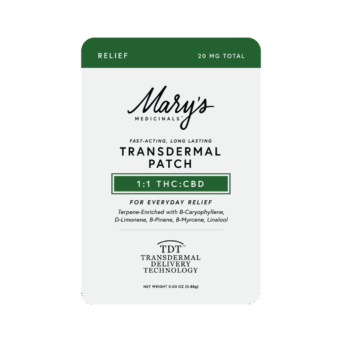
THC patches are made for the times you want a steady glide, not a sudden jump, so it’s smart to ask how long they take to kick in and how long they stick around. With transdermal delivery, you can usually count on a more even timeline than edibles, but your placement, your skin, and the patch formula still matter. Let’s walk through what’s going on under the surface, what “normal” timing feels like, and the simple tweaks that can make your experience smoother.
At Mary’s Medicinals, transdermal delivery is our home base. We build our patches to travel 7–10 layers deep through the skin and into the bloodstream for consistent, measurable delivery, so you can plan your day (or your night) with a little more confidence.
THC patches basics: transdermal vs topical (and why timing changes)
You’ve probably seen lotions, balms, and patches all grouped together. In practice, they behave very differently. A topical is typically meant to stay more local, working where you apply it. A true transdermal THC patch is designed to cross the skin barrier and enter systemic circulation, which is what creates more “whole-body” effects and a longer, steadier timeline.
A patch works with a simple idea: cannabinoids are more concentrated in the patch than in your skin, so they move gradually into the skin over time. Because cannabinoids are lipophilic (fat-soluble), the formulation needs the right transdermal carriers to help them pass through the skin’s lipid layers. That’s why two products can both be called “patches” and still feel totally different in real life. For a helpful, non-salesy breakdown of the mechanics, you can reference how THC patches are designed to deliver cannabinoids.
How long do THC patches take to work (realistic onset, not hype)
Most people notice THC patches starting to come on in about 15 to 60 minutes. For some, it’s a quiet shift you only recognize in hindsight. For others, it’s a clearer “oh, there it is” moment at around the one-hour mark. If your hands and feet tend to run cold or you place the patch on thicker skin, you might be on the slower side of that range.
One reason patches often feel more manageable is that they bypass digestion. You are not waiting on your stomach, and you are not dealing with first-pass liver metabolism the way you do with edibles. That can mean fewer surprises and a gentler climb. Leafwell has a solid overview of how transdermal patch onset and dosing can vary by person, which lines up with what we hear from customers every day.
THC patches placement: the simplest way to speed up onset
If you want a faster, more consistent onset, placement is your best lever. We recommend applying Mary’s patches to the inner wrist, the top of the foot, or the back of the knee. Those spots tend to have thinner skin and veins closer to the surface, which helps transdermal carriers do their job. If you’re aiming for discretion, the top of the foot is usually the easiest to keep covered without thinking about it.
A few real-world tips that make a noticeable difference:
- Start with clean, dry skin. Oils and lotions can mess with adhesion and can also interfere with consistent absorption.
- Press and hold for a few seconds. Think “set it and forget it,” but give it a fair stick at the start.
- Rotate sites. Swap left wrist to right wrist, left foot to right foot, so your skin gets a break and your results stay more consistent.
If you’re shopping and trying to compare options without getting lost in jargon, our guide on what to compare when choosing THC patches is a good place to start.
How long do THC patches last (and why they feel so even)
Duration is where THC patches really shine. A well-formulated transdermal patch is commonly designed to provide support for about 8 to 12 hours, and some people find it stretches a bit longer depending on their body and routine.
We also like that patches are “wearable dosing.” You are not locked into a single moment the way you are with a gummy. If you feel like you’ve reached your personal comfort zone, you can remove the patch to stop additional delivery. You might still feel effects for a while after removal, but the “dose in” stops once it’s off your skin. Leaf411 gives a clear explanation of how transdermal patches can provide extended effects and why people reach for them when they want a longer runway.
THC patches vs edibles vs inhalation: timing at a glance
If you’re deciding between methods, timing is usually the deciding factor. This is the general pattern many people report. Your experience can vary, but the shape of the curve is a useful guide.
| Method | Typical onset | Typical duration | What it often feels like |
|---|---|---|---|
| Inhalation (smoke/vape) | Minutes | Often 1–3 hours | Fast rise, noticeable peak, quicker fade |
| Edibles | Often 30–120 minutes | Often 4–8+ hours | Can be unpredictable, sometimes “peaky” |
| THC patches (transdermal) | Often 15–60 minutes | Often 8–12 hours | Gradual build, steadier support |
What can change THC patches onset and how long they last?
Even when you do everything “right,” your timing can shift a little from day to day. That’s normal. These are the variables we see most often:
- Placement: Thin skin with good blood flow tends to absorb more efficiently than thicker areas.
- Skin condition: Clean, dry, intact skin usually gives the most consistent performance.
- Body temperature and circulation: Warm skin can support diffusion; cooler extremities can slow things down.
- Tolerance and sensitivity: Your endocannabinoid system and your THC experience level play a big role in how strong it feels.
- Formula and cannabinoid mix: THC-only versus a blend, plus minor cannabinoids like CBN or THCa, can shift the overall feel.
One more thing that matters more than people expect: transparency. When you’re comparing products, look for batch-specific lab reports so you can verify cannabinoid content and consistency. If lab reports feel like reading a foreign language, our walkthrough on how to read a Certificate of Analysis (COA) makes it a lot less intimidating.
FAQ: THC patches timing, wear time, and best practices
Do THC patches work right away?
Not usually the way inhalation does. Most people feel something within 15–60 minutes, and it tends to build gradually instead of hitting all at once.
How long do THC patches take to work if you don’t feel anything at 30 minutes?
Give it a full hour before you call it. Slower onset can happen with thicker skin, cooler circulation, or less-than-ideal placement.
How long should you leave THC patches on?
Many transdermal patches are designed for 8–12 hours of wear. Follow your product directions, and if you feel like you’ve reached your comfort zone, remove the patch sooner.
Where should you place THC patches for the best onset?
Aim for the inner wrist, top of the foot, or back of the knee. Rotate sites between left and right sides to keep results consistent and give your skin a break.
Can you stop the effects of a THC patch?
You can stop additional delivery by removing the patch. You may still feel effects for a while after removal, but you are no longer adding more cannabinoids once the patch is off.
Conclusion
For most people, THC patches start working in about 15–60 minutes and last roughly 8–12 hours, which makes them a practical choice when you want steady, predictable support. If you want to dial in your results, focus on smart placement, clean and dry skin, and products with verified testing. If you want help choosing the right patch or figuring out which cannabinoid blend fits your routine, reach out through the Mary’s Medicinals contact page.