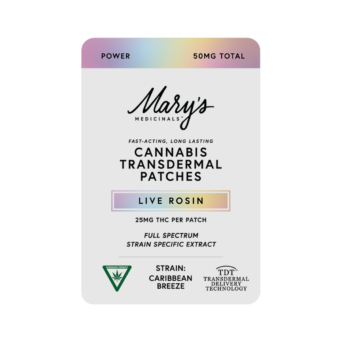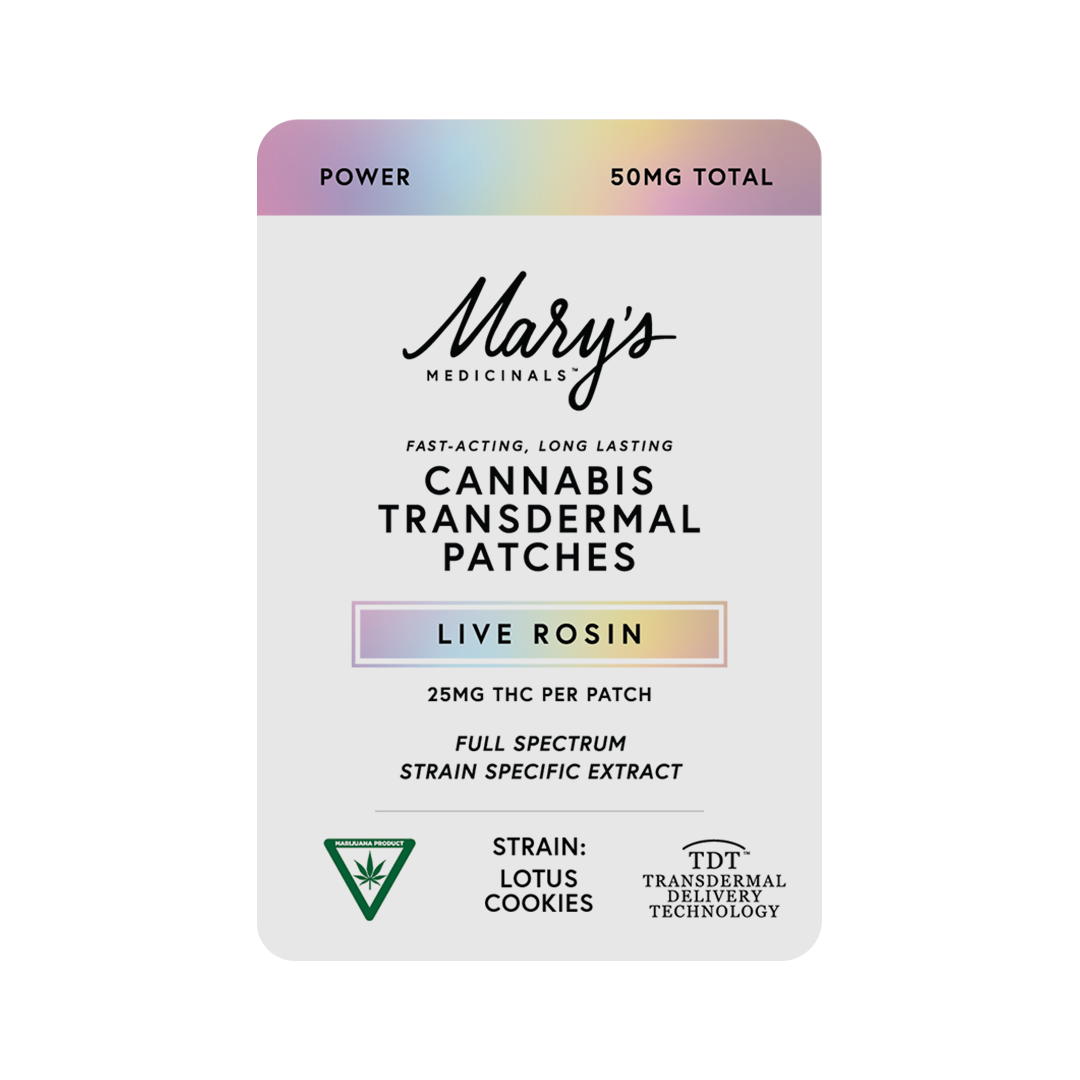
THC patches and drug tests are connected in a way that surprises a lot of responsible, routine wellness users. If you wear a patch because you like the steady, low-key support, then a workplace screen, probation test, or pre-employment panel can feel like a curveball. You may have heard the line that “topicals do not show up on drug tests,” and sometimes that is true. The catch is that a transdermal patch is not the same thing as a lotion you rub into a sore spot.
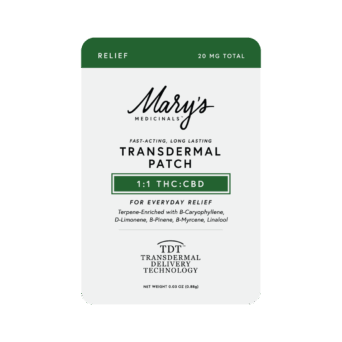
At Mary’s Medicinals, we built our reputation on transdermal technology because it fits into real life. You put it on, you go about your day, and you do not have to think about re-dosing every couple of hours. Our patches are designed to go 7 to 10 layers deep through the skin and into the bloodstream. That systemic delivery is the whole point, and it is also why THC patches carry a different drug-test conversation than a standard topical.
Why THC patches matter for cannabinoid screening
Most programs start with a urine cannabinoid screening. That first pass is usually an immunoassay, which is a quick “yes or no” style screen that looks for signs your body processed cannabinoids. The common target is a THC metabolite called THC-COOH. In plain English, the test is not judging how you consumed cannabis. It is only asking whether a metabolite is present above a set cutoff.
If you want a clear overview of how that urine screen works and why confirmation testing matters, the urine cannabinoid screen explanation from University of Rochester Medical Center lays it out in an easy, clinical way.
THC patches vs. topicals: the difference that changes drug-test risk
When people say “topicals do not show up,” they are usually talking about products made to stay local. A classic topical is formulated to work in the skin and nearby tissue, with limited and inconsistent entry into general circulation.
A true transdermal patch is engineered for the opposite. It uses formulation strategies that help cannabinoids move through the skin barrier and into the bloodstream. Think of the basic concept behind nicotine or hormone patches, just with cannabinoids. If you like steady, controlled delivery, that is a feature. If you are trying to keep your odds of a positive test as low as possible, that same feature is the tradeoff.
For a third-party explanation of how transdermal cannabis is designed for systemic absorption, see Leaf411’s transdermal cannabis patch education.
Will THC patches cause a positive drug test THC result?
In most real-world situations, yes, you should assume THC patches can lead to a positive drug test THC result. Once delta-9 THC reaches your bloodstream, your body processes it. One end result is THC-COOH, the metabolite most urine tests are set up to detect.
How long a test stays positive varies a lot from person to person. Dose, how often you use THC, your metabolism, and body composition all matter. If you want a general explanation of why transdermal products are more likely to show up than non-transdermal topicals, and why detection windows can vary, the Royal Queen Seeds overview on cannabis topicals and drug tests does a decent job summarizing the basics.
THC patches and drug tests: cutoffs, confirmations, and what the lab actually decides
Here is the part most people do not hear until they are stressed and Googling at midnight. A lot of testing programs use a two-step process:
- Initial screen (immunoassay): fast, cost-effective, and can be prone to cross-reactivity.
- Confirmatory test (often GC-MS or LC-MS/MS): slower, more specific, and used to verify what the screen flagged.
Many programs follow the federal SAMHSA guideline of 50 ng/mL for the initial urine screening cutoff. A positive screen may or may not automatically trigger confirmation. Sometimes confirmation is standard. Sometimes it only happens if policy requires it. Sometimes you have to request it. That is why it helps to ask the testing program what their steps are before you assume a “false positive” will be corrected on its own.
| Step | What it does | Why it matters for THC patches |
|---|---|---|
| Immunoassay screen | Flags cannabinoids above a cutoff (often THC metabolites) | Does not care if exposure was smoking, edibles, or transdermal |
| Confirmatory testing | More specific identification of compounds and metabolites | Can help sort out cross-reactivity, but not all programs run it automatically |
What about THCa, CBN, and CBD transdermal cannabis patches?
Not all patches carry the same testing risk. The cannabinoid matters, the formula matters, and your use pattern matters. If you are trying to avoid surprises, here is the practical lens we use when customers ask us about it.
- CBD patches: CBD is not the usual target on standard workplace panels. Still, some CBD products can contain trace THC depending on how they are made. If you are under strict testing, reading the COA is not “extra.” It is the baseline.
- CBN patches: CBN can be an edge case. Some immunoassays may cross-react with non-THC cannabinoids and create a presumptive positive that only gets clarified if confirmatory testing is done.
- THCa patches: THCa is the non-decarboxylated precursor to THC and is typically discussed as non-intoxicating in its raw form. Drug testing science and workplace policies are still catching up to newer cannabinoids, so if your role is safety-sensitive, treat THCa as “ask questions first,” not “assume it is fine.”
If THCa is part of your routine, our internal guide THCa Recovery Explained: What a THCa Patch Does breaks down what Recovery (THCa) Transdermal Patches are designed for and why delivery method matters.
How to lower drug-test risk if you use transdermal cannabis
We cannot predict how your body will metabolize cannabinoids or how a specific program will handle your result, and we cannot give legal advice. What we can do is help you think like someone who does not want surprises.
- Be honest with yourself about the goal. If you need to minimize drug-test risk, avoid delta-9 THC patches. That is the simplest lever you can pull.
- Read the COA every time. Look beyond the headline cannabinoid. Small amounts of THC can add up with regular use.
- Do not mix up “topical” and “transdermal.” A patch is built for systemic delivery. A standard topical is typically built for localized support.
- Ask about confirmation testing. Specifically: Do they confirm positives with GC-MS or LC-MS/MS, and what cutoffs do they use?
If you want to get really clear on wording, mechanisms, and what “transdermal” does and does not mean, keep our explainer bookmarked: Transdermal Cannabis Tech: What “Transdermal” Means (and What It Doesn’t).
Choosing a patch that fits your week (and your testing reality)
Sometimes you are not asking from a place of curiosity. You are trying to make a decision with a calendar in mind. If you have a safety-sensitive job, a licensing board, or a workplace policy that treats any THC metabolite the same no matter what, you may decide it is not worth the risk to use THC-containing patches at all.
On the other hand, if you are not subject to testing, or you have clear protections and medical authorization where you live, your math might look different. Either way, we want you making that call with your eyes open, not based on a rumor about topicals.
If you are comparing formats, cannabinoids, and use cases across our lineup, our Transdermal & Topical Products collection page is a good place to get your bearings on patches, compounds, and other delivery types.
FAQ: THC patches and drug tests
Do THC patches show up on urine tests?
They can. Because THC patches are designed for systemic absorption, your body can metabolize THC into THC-COOH, which is what many urine cannabinoid screening panels detect.
How long after using a patch could a drug test THC result be positive?
There is no single window that fits everyone. Detection depends on dose, frequency, metabolism, and body composition. If you are close to a test date, plan conservatively.
Are CBD transdermal patches safe for drug testing?
CBD is not typically the target of standard drug tests, but trace THC can be a concern depending on the product and how often you use it. Reviewing a Certificate of Analysis and choosing products that match your requirements is the safest approach.
Can CBN patches cause a false positive?
They might, especially on certain initial immunoassay screens due to potential cross-reactivity. Confirmatory lab testing can often sort out what the screen flagged, but it is not always automatic.
Are THCa patches less likely to affect cannabinoid screening?
THCa is chemically different from delta-9 THC, but testing policies are not always nuanced about newer cannabinoids. If your employer or program is strict, treat THCa patches as a potential risk and ask how positives are confirmed.
Conclusion
If you want the simplest rule of thumb, it is this: transdermal cannabis is systemic, and systemic cannabinoids are what many drug tests are built to catch. THC patches are the highest-risk option for a positive drug test THC result. CBD, CBN, and THCa each come with their own nuance, especially when you factor in COAs, cross-reactivity, and whether confirmation testing is part of the program. When you are unsure, read the COA, ask how the test is handled, and choose what fits your life as carefully as you choose the rest of your wellness routine.