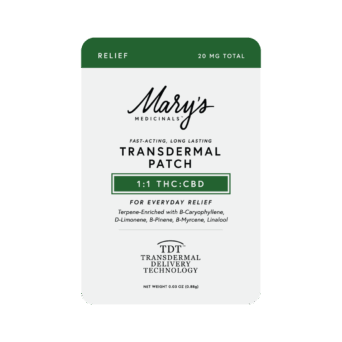
CBN for sleep can feel nothing like a product that simply helps you relax, even if they come in similar-looking bottles or patches. If you have ever tried one formula and felt calm but still wide awake, then tried another and felt ready to actually turn the lights off, that difference is real. Most of the time it comes down to the behind-the-scenes details: cannabinoid ratios, terpene choices, and how steady the delivery is in your routine.
At Mary’s Medicinals, we like clear labels more than mysterious vibes. You deserve to know what you are taking, why it was built that way, and what kind of night it is meant to support.
CBN for sleep starts with one question: do you want to relax or do you want to sleep?
Relaxation is a downshift. Your shoulders drop, your thoughts slow down, and you feel more comfortable in your skin. Sleep is a bigger gear change. Your brain cycles through stages, your nervous system shifts, and your body does the overnight maintenance work you cannot fake with a quick wind-down.
That is why a “relax” product can be perfect after dinner but still leave you staring at the ceiling at 1:00 a.m. Relax is often about easing tension. Sleep support is about easing tension and helping your system settle into staying asleep once you get there.
What “CBN for sleep” really means (and what it does not)
CBN, short for cannabinol, is a minor cannabinoid that forms as THC naturally ages and oxidizes with exposure to heat, light, and oxygen. People often describe CBN as minimally psychoactive compared to THC, which is one reason it shows up in nighttime formulas.
Still, we are careful with the simple story that CBN automatically equals sedation. The nuance matters if you are trying to build a dependable routine instead of chasing a one-off knockout night. The Sleep Foundation notes that CBN is increasingly used as a sleep aid and is considered minimally psychoactive, while also emphasizing that stronger research is still needed to confirm benefits and best practices for use. That overview is worth reading if you like seeing the current consumer-facing consensus in one place: CBN and sleep support guidance from the Sleep Foundation.
We also like pointing people to actual controlled human data when it exists. A 2023 controlled trial looked at CBN at different doses and tracked sleep outcomes plus next-day functioning, which helps ground the conversation beyond online lore: 2023 controlled human study on CBN and sleep outcomes.
CBN for sleep is rarely a solo act: why terpenes change the feel
If you have tried CBN on its own and thought, “That was subtle,” you are not alone. In the real world, many of the most consistent sleep-leaning experiences come from combination formulas, not one isolated cannabinoid. This is where the entourage effect shows up in everyday terms: cannabinoids and terpenes can shape the experience together, and a smart blend often feels more predictable than any single ingredient.
That also explains why two products with CBN on the label can feel wildly different. One might lean more “peaceful on the couch.” Another might feel like you are naturally sliding toward sleep. Same headline ingredient, different supporting cast.
Myrcene and linalool: the terpene combo that separates “relax” from “sleep”
Terpenes are responsible for the flavors, aromas, and effects associated with different cannabis profiles. They do not just make something smell good. They can influence whether a formula lands as mental calm, physical heaviness, or that gentle readiness for bed.
Two terpenes we pay close attention to in sleep-oriented conversations are myrcene and linalool:
- Myrcene is commonly linked with that heavy, grounded body feeling that people associate with classic nighttime cannabis. If you are trying to quiet restless legs or settle into the mattress, myrcene is often part of the conversation.
- Linalool, also found in lavender, is often associated with easing the mental buzz that keeps you scrolling, planning, and rehashing the day.
If you want a simple mental shortcut, try this: linalool helps your mind unclench, and myrcene helps your body follow. When formulators talk about terpene targets for sleep blends, this is the kind of thinking they are using behind the curtain.
THC indica for relaxing: why it feels great, and why it can be a different tool than CBN for sleep
We get why people reach for thc indica at night. THC can feel like a fast way to take the edge off, especially when it is paired with a terpene profile that leans myrcene-forward. For a lot of customers, that combination reads as “finally, my body is quiet.”
But relaxation and sleep continuity are not always the same target. With THC, your dose and frequency matter. Some people find it works well for falling asleep, but is less reliable for staying asleep night after night, especially if the dose creeps up over time. That is one reason many customers prefer CBN-forward options for nights when they want support with a lower psychoactive ceiling than a THC-heavy approach.
CBN for sleep vs relax: how to read a label like you actually mean it
If you want to get better results, stop shopping by strain nicknames and start shopping by cannabinoid ratio plus terpene intent. You are not trying to win a guessing game. You are trying to match a formula to your pattern.
| Goal | What it often feels like | What to look for on the label |
|---|---|---|
| Relaxation | Easier body, lighter mood, tension release, still able to hang on the couch and talk | Relax (THC Indica) style ratios, myrcene-leaning terpene infusion, moderate dosing |
| Sleep support | Wind-down plus “ready for bed,” fewer middle-of-the-night wakeups for some people, steadier overnight feel | CBN-forward or CBN-included formulas, linalool plus myrcene pairing, delivery designed for consistency |
If you want a Mary’s-specific walkthrough of how we think about dose, ratio, and terpene infusion in transdermal formats, use our guide to reading transdermal patch labels for dose, ratio, and terpenes.
How we think about delivery at night: consistency beats surprises
Formulation matters, and so does delivery. At Mary’s, we do not grow strains, but we do create proprietary terpene blends and cannabinoid mixes for targeted outcomes. Then we pair them with delivery formats designed to be consistent, because bedtime is not the moment most people want trial-and-error surprises.
When you use a transdermal patch, you are also working with a different kind of experience than a fast-on, fast-off edible. Our patches are designed to go 7 to 10 layers deep into the bloodstream. If you are using patches, we recommend applying them to the inner wrist, the top of the foot, or behind the knee where skin is thinner and veins are closer to the surface. For discretion, the top of the foot is a favorite. Rotate left and right sides so your skin gets a break.
If you want help picking between sleep support and relaxation support in our lineup, our team can talk it through with you based on your tolerance, timing, and what kind of night you are trying to have. Reach out through the Mary’s Medicinals contact page.
FAQ: CBN for sleep, relaxing formulas, and terpene effects
Is CBN for sleep better than THC?
It depends on what you want and how you personally handle THC. THC can feel very effective for relaxing and falling asleep, but many people prefer CBN-forward sleep support when they want less intoxication or a steadier nighttime feel. Your best fit is usually a formula that matches your tolerance and your wake-up pattern.
What do myrcene and linalool actually change?
In simple terms, myrcene often shows up as physical heaviness and deeper unwinding, while linalool often feels like mental quiet. Together, they can make the shift from “relaxed” to “ready for sleep” feel smoother.
Why does thc indica help me relax but not always keep me asleep?
Falling asleep and staying asleep can respond differently to dose, timing, and delivery. Some products peak quickly and fade, which can feel great at the start of the night and less helpful at 3:00 a.m. If sleep maintenance is your issue, a longer, steadier delivery approach may fit your routine better.
How can I tell if a product is meant for sleep, not just calming?
Look for CBN included in the cannabinoid lineup, and check whether the terpene intent supports both mind-calming and body-settling effects. Products that clearly list milligrams, ratios, and terpene infusion are easier to dial in.
What is the most beginner-friendly way to start?
Start low and go slow. Keep one variable consistent for a few nights so you can read your results without guessing. If you are THC-sensitive, consider lower-THC or THC-free sleep-oriented options first, then adjust based on how you feel the next morning.
Conclusion
Relaxation is not the same as sleep, and once you start looking at ingredients instead of product names, that becomes obvious fast. CBN for sleep often works best when it is supported by the right terpene partners, especially myrcene and linalool, and when the delivery fits your bedtime reality. If you want a second set of eyes on your routine, reach out through our contact page and we will help you find a formula you can stick with.