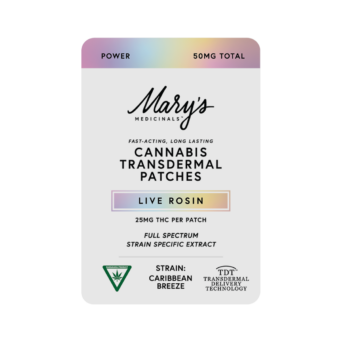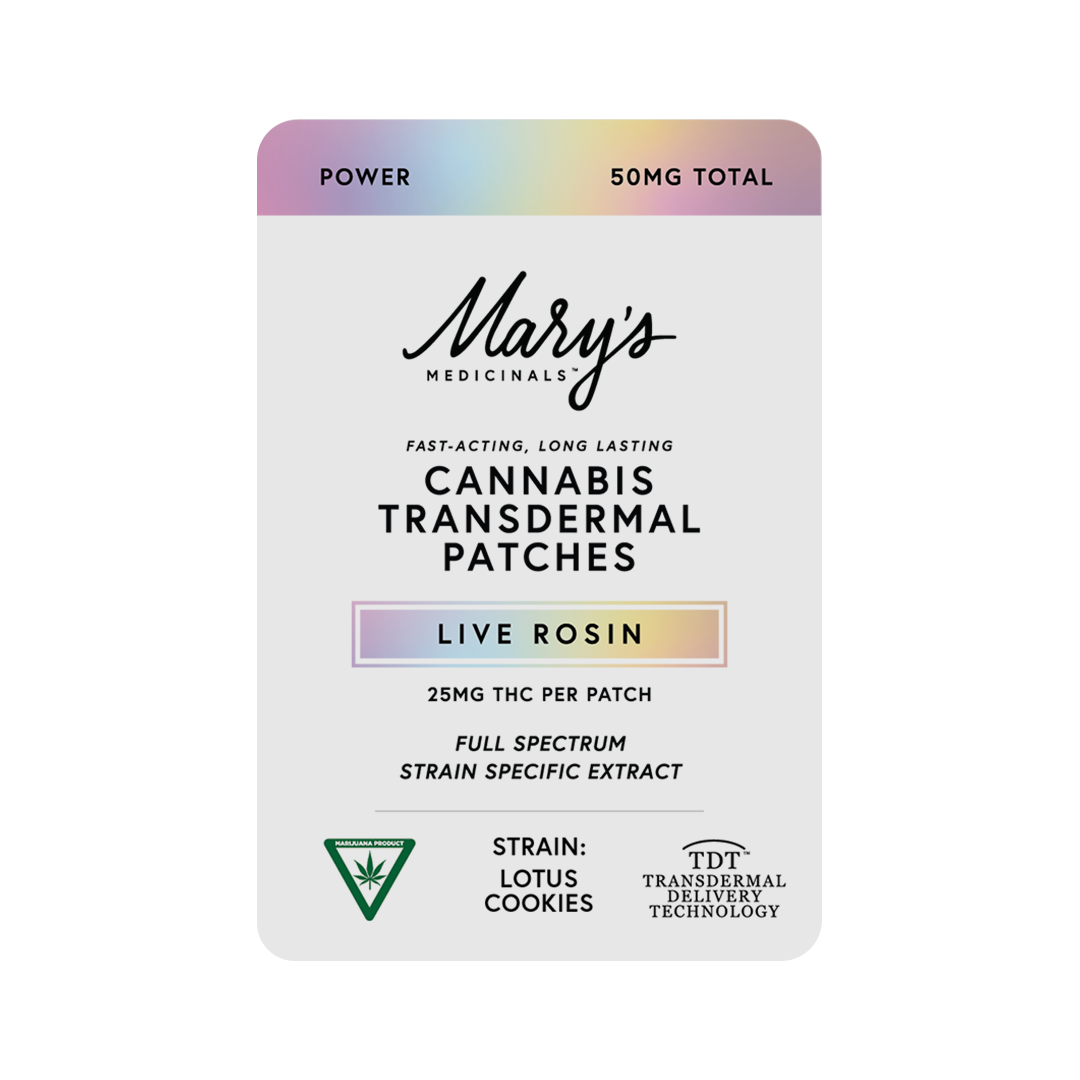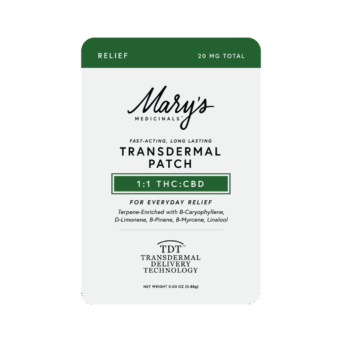
If you’ve typed THC patches near me into your phone, you already know the vibe: ten tabs open, three menus that look different from yesterday, and a bunch of “patches” that might be patches in name only. You’re not asking for much. You want something discreet, steady, and easy to fit into real life, not a science project.
We’ve been building transdermal cannabinoid products at Mary’s Medicinals since the beginning, and we’ve watched the patch category get louder and harder to shop. So let’s make it simple. Here’s how you can tell what’s legit, what to ask for, and how to leave the dispensary with the product you meant to buy.
Why “THC patches near me” search results get noisy fast
Search engines can tell you what’s close, but they’re not great at telling you what’s actually on the shelf right now. Dispensary menus change constantly. A listing can stick around long after a product sells out, or show up in a generic “topicals” bucket that mixes creams, gels, and patch-style products together.
If you want a quicker reality check before you drive across town, start with a menu tool that’s built around patch listings. The Weedmaps cannabis patch listings can help you see whether patches are being carried in your area at all, not just whether a dispensary exists near your zip code.
THC patches near me: how to tell if it’s truly transdermal
Here’s the biggest mix-up we see: not every patch is designed to deliver cannabinoids into your bloodstream. Some are basically topical products in patch form, meant to stay closer to the surface. A true transdermal patch is built for systemic delivery, meaning the cannabinoids are formulated to move through the skin barrier and into circulation.
If you’re staring at a menu description and it’s vague, look for clues like transdermal technology, systemic effects, or controlled release. If it only promises “targeted topical relief,” you might be looking at a topical-style patch instead of a transdermal one.
Want a plain-English explanation from a dispensary education source? Zen Leaf lays out the basics in its guide to transdermal cannabis products, including how transdermals are designed differently than standard topicals.
Transdermal patches vs topicals: what you’ll notice in real life
Topicals are usually about where you put them. Transdermal patches are more about how steady the experience feels over time.
THC and other cannabinoids are lipophilic, so they do not naturally move through skin and water-based formulas easily. That’s why a typical lotion, gel, or salve often stays more localized. With transdermal patches, the formulation is designed to go deeper. Our patches are built to go 7 to 10 layers into the skin, reaching the bloodstream, which is why people often describe them as more consistent and more “set it and forget it” than other formats.
If you like to understand the “why” before you buy, our cannabis education hub breaks down delivery, dosing, and cannabinoids without talking down to you.
THC patches dispensary basics: timing, wear time, and patch styles
People often look for weed patches because they want a cleaner timeline than smoking or edibles. Patches skip digestion, so you’re not waiting on your stomach to do its thing. Many people notice effects in about 15 to 30 minutes, then it continues to build gradually.
Most dispensaries stock one or both of these patch styles:
- Matrix patches (like Mary’s Medicinals): cannabinoids are blended into the adhesive layer, and release depends on the formulation and surface area.
- Reservoir patches: cannabinoids sit in a reservoir and pass through a membrane that helps control the release rate.
If you want to compare products across brands, Leafly’s overview of transdermal patch products is a helpful starting point for understanding how patches differ from other topical categories.
| Format | Typical onset | Typical duration | Why people choose it |
|---|---|---|---|
| Transdermal patch | About 15 to 30 minutes | Often 8 to 12 hours | Steady, discreet support that fits a workday or a full night |
| Edible | Often 45 minutes to 2 hours | Often 4 to 12 hours | Longer experience, but timing can be less predictable |
| Topical gel or compound | Often faster locally | Varies | Spot-specific comfort without a full-body feel |
One honest heads-up: patches are a plan-ahead format. You may feel the first signs within 15 to 30 minutes, but peak effects can show up later, often a couple hours in. And once it’s on, it’s on. You can remove it if you need to, but it’s not the same as simply choosing not to take another dose.
THC patches near me: what they cost and how to compare value without guessing
At a typical THC patches dispensary, you’ll see pricing all over the map, often around $10 to $50+ per patch depending on potency, cannabinoids used, and how advanced the formulation is.
When you compare value, try this instead of just eyeballing the price:
- Look at mg per patch, not just the package design.
- Ask expected wear time so you can do a simple cost-per-hour comparison.
- Think about consistency. If you want steady effects you do not have to babysit, that “smoothness” is part of the value.
Also, shop for your goal, not the hype. Some people want THC-dominant support. Others do better with balanced ratios or minor cannabinoids like THCa or CBN. Different days, different plans.
How to apply a transdermal patch so it actually works like it should
This is the part people rush, then wonder why their patch did not feel consistent.
For our patches, we recommend placing them where skin is thinner and veins are closer to the surface:
- Inner wrist
- Top of the foot, also our favorite spot when you want to keep things low-key
- Back of the knee
Start with clean, dry skin. Skip super-hairy areas, and avoid spots where waistbands, socks, or tight clothing constantly rub. If you use patches often, rotate sites between left and right sides to give your skin a break.
A smart in-store checklist for “THC patches near me” shopping
When you’re on a dispensary menu, everything can look the same until you know what to look for. Keep this list in your notes app and you’ll save yourself a lot of trial and error.
- Confirm it’s transdermal: ask whether it’s designed for systemic delivery, not just topical use.
- Ask what kind of patch it is: matrix or reservoir, and whether the release is meant to be controlled.
- Check dosing details: mg per patch, recommended wear time, and whether the brand suggests starting low.
- Ask for testing: if the dispensary can share a batch-specific COA, even better.
- Match the cannabinoids to your day: THC alone, balanced ratios, or formulas that include cannabinoids like THCa or CBN.
If you want an easy way to talk through it at the counter, we made a budtender-friendly guide: THC Patches: 10 Questions to Ask a Budtender. Bring it up on your phone and you’ll sound like you’ve done this before, even if you haven’t.
FAQ: THC patches near me
Are “weed patches” and transdermal patches the same thing?
Not always. “Weed patches” is a catch-all phrase. Some are transdermal and designed for systemic delivery, and others act more like topicals that stay closer to the surface. If the menu does not clearly say transdermal, ask.
How long do THC patches take to kick in?
Many people notice effects in about 15 to 30 minutes, with a gradual build. If you’re new to patches, plan ahead so you are not surprised when it gets stronger later.
How do I find a THC patches dispensary that really has them in stock?
Use a patch-specific category tool first, then call the dispensary to confirm before you go. Online search results can be outdated, and menus can lag behind real inventory.
Where should I place a transdermal patch?
We recommend the inner wrist, top of the foot, or back of the knee. Rotate left and right sides if you use patches regularly.
What if I’m still not sure which patch is right for me?
Talk to us. Use Mary’s Medicinals customer support and tell us what you’re trying to accomplish and when you plan to wear a patch. We’ll help you narrow it down without overcomplicating it.
Conclusion
Searching THC patches near me is a good first step, but you’ll get better results when you shop with a short filter in mind. Confirm it’s truly transdermal, check real-time availability, and choose brands that are upfront about dosing and design. When you’re ready to explore our science-backed options built for everyday routines, take a look at Mary’s transdermal and topical cannabis products and keep that checklist handy for your next dispensary run.