CBN is showing up in a lot of nighttime routines lately, and if you’re wondering what it actually is (and why it’s often marketed for sleep), you’re in the right place. You’ve probably seen it in gummies, tinctures, and capsules, usually alongside other cannabinoids, not as a solo act.
Here’s the grounded, real-life version: CBN has a different backstory than CBD or THC, its effects can feel subtle on its own, and it tends to make more sense when you look at how it’s paired, especially in formulas that include a small, measured amount of THC. This guide walks you through what you need to know, without talking over your head.
What is CBN, really?
CBN is short for cannabinol. It’s one of the naturally occurring cannabinoids connected to the cannabis plant, but it’s not usually present in big amounts in fresh plant material. That’s why CBN can feel a bit “new” even though it’s been studied and discussed for a long time.
If you’re shopping and you see CBN positioned as a “sleep cannabinoid,” it helps to remember one thing: CBN is more known for the way it shows up over time than for being a major cannabinoid the plant produces right away.
What is CBN made from? How CBN forms from THC
CBN is best understood as part of THC’s timeline. When THC is exposed to light, heat, and oxygen, it slowly changes through a process called oxidation. One of the compounds you can end up with is CBN.
If you’ve ever heard that older cannabis can feel “sleepier,” this is part of where that idea comes from. The Sleep Foundation explains how storage conditions can influence cannabinoid breakdown, including why improperly stored products may show higher CBN over time in their overview of CBN for sleep.
Because CBN comes from THC, you’ll sometimes see people describe it as mildly intoxicating. In practice, it’s generally considered far less potent than THC, and many people report it feels gentle, especially at common serving sizes.
CBN effects: what you might feel (and what you might not)
If you’re trying CBN, you’re probably hoping for a calmer landing at the end of the day. Most feedback you’ll hear from customers centers on easing into relaxation, taking the edge off, and feeling more ready for bed. Still, your experience depends on your body, your routine, and what else is in the formula.
One honest note: when someone says, “CBN knocked me out,” it’s worth checking the label. A lot of products that feel strongly sleep-leaning include THC, calming terpenes, or other cannabinoids that can shift the whole experience.
- CBN by itself can feel mild, especially if you’re expecting a dramatic sedative effect.
- CBN with THC is often where people notice the biggest difference, even when THC is kept low.
- CBN with terpene support can feel smoother and more “complete,” depending on how sensitive you are to terpenes.
CBN for sleep: what the research says so far
CBN has a big reputation in the sleep space, but the science is still being built in real time. A GoodRx review of CBN for sleep points out something that surprises a lot of people: some early sedation claims came from older research where cannabinoids were combined, and then the drowsy effect was sometimes attributed to CBN alone. When you isolate CBN, the picture gets less clear.
The good news is researchers are tightening up the questions and the study designs. The CUPID study protocol describes a double-blind, placebo-controlled trial looking specifically at CBN isolate and sleep outcomes in people with insomnia. That matters because it helps separate expectations from measurable effects.
There’s also growing interest in what happens after you take CBN, since your body metabolizes cannabinoids into other compounds. A paper in Neuropsychopharmacology discusses how CBN can be converted into 11-hydroxy-CBN, which can reach the brain and interact with receptors. If you’ve ever wondered why two people can take the same product and report very different results, this type of metabolism research is one possible piece of the puzzle. You can read the paper at Nature.
Why THC and CBN get paired so often in nighttime formulas
If you keep seeing THC and CBN together, it’s not random. THC has more consistent evidence and consumer experience behind it for helping people fall asleep, especially at low doses. CBN may help shape the overall “wind-down” feel of the formula, which is why brands like to use them together.
In the real world, pairing cannabinoids is often about balance. You want enough support to quiet the day down, but not so much that you wake up feeling heavy or foggy. For a lot of people, the pairing approach can mean using less THC while still getting a bedtime-friendly effect.
You’ll also hear people talk about synergy and the entourage effect. If you want a plain-language refresher, you can explore Mary’s Medicinals education hub at MarysMedicinals.com/learn, where we break down how cannabinoids and terpenes can influence the overall experience when used together.
How to shop for a CBN product without getting swept up in hype
When you’re choosing a CBN product, your goal is not to find the biggest number on the front label. Your goal is to find a formula you can understand and repeat. Consistency is what helps you learn what actually works for you.
- Look at the whole cannabinoid lineup. If you want to avoid feeling too altered, check the THC milligrams per serving instead of assuming “CBN” equals non-intoxicating.
- Prioritize batch testing and clear dosing. Reliable products should make it easy to see what’s in each serving and confirm it with a COA.
- Pay attention to terpenes if they’re included. Terpenes influence aroma and flavor, and many customers also associate them with the feel of a formula. If you want help decoding common terpene names, Mary’s primer is a useful starting point: Terpenes 101.
- Start low and adjust slowly. Give the same dose a few nights before you change it, and keep notes. Your “best” dose is the one that supports restful mornings, not the one that hits the hardest at night.
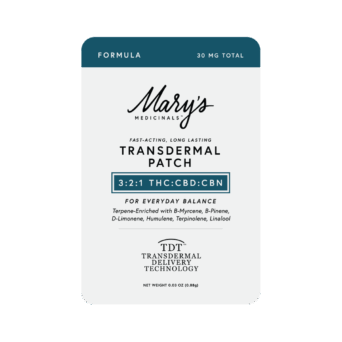
If you want to compare formats and see which cannabinoid mixes fit your comfort level, you can browse our lineup at Mary’s Medicinals All Products. Look at serving size, delivery method, and cannabinoid ratios, then choose what feels realistic for your routine.
CBN for sleep: timing tips you’ll actually use
Even a well-made product can feel inconsistent if you take it randomly. Think about two things: how long it takes to kick in, and how long it tends to last for you. Then match that to what your nights look like.
- If falling asleep is your problem: choose a consistent time window and keep your dose steady so you can judge it fairly.
- If staying asleep is your problem: you may prefer a formula designed to feel more sustained overnight, which is one reason THC and CBN blends are so popular.
- If you wake up foggy: scale back THC first, then reassess. THC is usually the bigger driver of noticeable next-day effects.
Also, you know this, but it’s worth saying out loud: late-day caffeine, doomscrolling, inconsistent bedtimes, and stress can overpower what any cannabinoid is trying to do. Think of cannabinoids as support for your routine, not a replacement for it.
FAQ: CBN, CBN for sleep, and THC and CBN
Is CBN actually a sleep cannabinoid?
CBN is often called a sleep cannabinoid because it’s commonly used at night and many people associate it with feeling more ready for bed. The research on CBN alone is still developing, and stronger real-world results are often reported when CBN is paired with other cannabinoids, especially THC.
Will CBN get you high?
CBN is typically described as mildly intoxicating compared to THC, but your experience depends on dose, your sensitivity, and whether the product includes THC. If you want to keep the experience light, always check THC per serving.
Why do brands combine THC and CBN for sleep?
THC has more established sleep-leaning effects for many people. CBN may contribute a complementary wind-down quality. Together, they can create a more balanced nighttime feel, often with lower THC than you’d need on its own.
What should you look for in a CBN for sleep product?
Look for clear dosing, consistent batch testing, and a formula that matches your goals. If you’re new, keep it simple: start low, use the same dose for a few nights, and adjust gradually.
Can you take CBN every night?
Some people do. If your product includes THC, consider using the lowest effective dose and taking occasional breaks if you notice you need more and more to get the same effect.
Bottom line: CBN is interesting on its own, but pairing is often the point
CBN has a genuinely unique origin story since it forms from THC as it’s exposed to air, heat, and light. And yes, it may have a place in your nighttime toolkit. The most practical takeaway, though, is that CBN for sleep often shines in thoughtfully built combinations, especially THC and CBN together, sometimes with terpene support.
If you want help getting dialed in, lean on consistent dosing, reliable testing, and a routine you can repeat. Then let your mornings be the judge. When you wake up feeling more like yourself, you’ll know you found the right balance.