Microdose THC With Transdermal THC Patches Safely when you want your day to feel steady, not unpredictable. If you have ever thought, “I just want a little support, not a whole situation,” a transdermal patch routine can be a good fit. You get a slower release, fewer surprises, and a dosing style that feels more like adjusting a dimmer than flipping a switch.
Why microdose THC with transdermal THC patches instead of smoking or edibles?
Microdosing is about using a small amount of THC so you can stay present and functional. Most people are not chasing a big wave. They are looking for that quiet moment when you realize you have been moving through your day with less friction.
Transdermal delivery supports that vibe because it is built for consistency. Rather than hitting fast and fading fast, a patch is designed to release cannabinoids gradually over hours. In their transdermal patch dosing guide, Leafwell notes that patches are intended for controlled release over an extended window, commonly up to about 12 hours.
And compared with edibles, patches often feel more predictable. Edibles have a lot of variables you cannot really control, like what you ate, how quickly your digestion is moving, and how your liver metabolizes THC. Patches skip the digestive detour and aim for a smoother, steadier arc.
How transdermal THC patches work (and why microdose THC feels “lower and slower”)
Transdermal patches are made to help cannabinoids pass through the skin and into circulation using specialized carriers and permeation enhancers. The point is not speed. The point is controlled delivery, so the experience can build gradually instead of arriving all at once.
This is also where bioavailability matters. Bioavailability is the proportion of a substance that enters circulation and has an active effect. Higher bioavailability can mean you may need less product to reach your desired outcome. That is one reason many people find transdermal microdosing easier to “dial in” over time.
Can you microdose THC by cutting transdermal THC patches? Matrix vs reservoir matters
This is the question we get all the time, usually right after someone has a pair of scissors in hand. The honest answer is: it depends on the patch design.
In general, there are two common types:
- Matrix patches: Cannabinoids are distributed evenly throughout the adhesive. These are typically the cuttable kind.
- Reservoir patches: Cannabinoids sit in a separate compartment. Cutting can damage the delivery system and disrupt release.
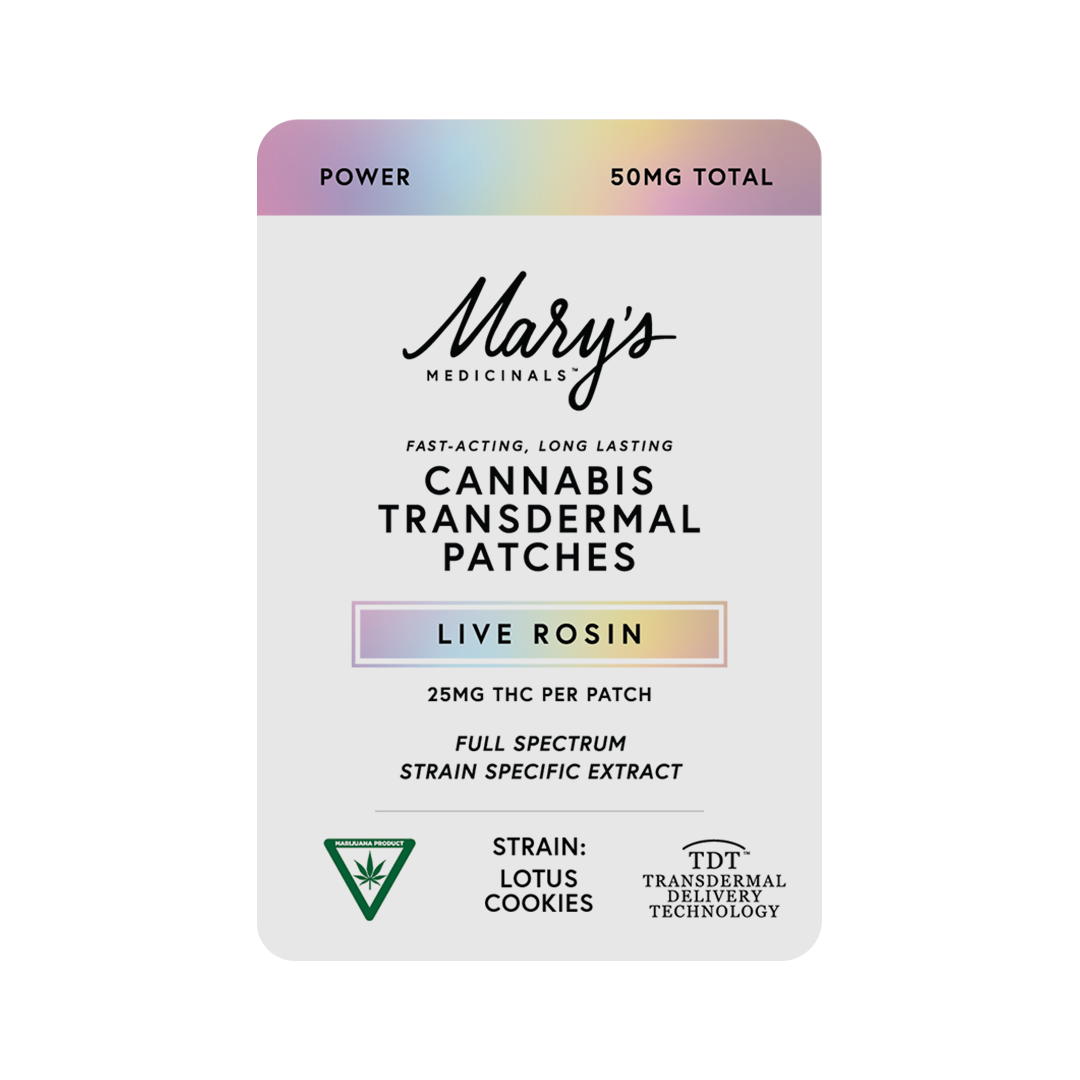
If you are working with a matrix-style patch, like Mary’s, cutting can be a practical way to microdose because portions tend to stay proportional. We talk more about what to look for, and why patch design matters, in Best THC Patches for Pain: What to Compare.
If the manufacturer does not clearly say “matrix” and does not explicitly say it is safe to cut, do not cut it. When in doubt, keep it intact and adjust using wear time or a different strength instead.
How to microdose THC with transdermal THC patches: a simple portioning routine
Once you know you have a cuttable matrix patch, microdosing becomes less about “more” and more about repeatable. You are trying to learn your own pattern. That only happens if you change things slowly.
- Pick a small starting point: If you are THC-sensitive or you are aiming for daytime clarity, start with 1/4 of a patch.
- Keep it steady for a few tries: Use the same portion for 2 to 3 sessions before changing anything.
- Only tweak one thing at a time: If you change portion size, keep placement and wear time the same so you can tell what actually made the difference.
- Jot down quick notes: Portion, placement, time applied, when you first noticed anything, and how you felt when you removed it.
You will see people toss around a microdose range like 1 to 5 mg THC. That can be a helpful mental anchor, but patches are different because they release slowly over time, not all at once. Cannigma’s overview of THC transdermal patch duration and effects describes how patches are commonly experienced as longer-lasting, often around 6 to 12 hours, with effects that feel less spiky because of steady delivery.
Where to apply patch cannabis products for more consistent absorption
Microdosing is not just about the portion you cut. Placement matters more than most people expect. For our patches, we recommend applying to the inner wrist, the top of the foot, or behind the knee, where skin tends to be thinner and veins are closer to the surface.
- Most discreet option: The top of the foot is easy to cover with a sock or shoe.
- Rotate for comfort: Switch between left and right sides to give your skin a break.
- Set yourself up for success: Apply to clean, dry skin and press firmly, especially around the edges.
One more practical tip: avoid thicker-skin placement if you are trying to keep your results consistent. The goal is “same inputs, same outputs.”
Microdose THC with transdermal THC patches: a consistency checklist (what helps, what throws it off)
Patches are designed to be steady, but your routine still drives the outcome. If microdosing has ever felt inconsistent, it is usually not a mystery. It is typically one of the basics.
- Do apply to clean, dry skin and skip lotions or oils on that spot beforehand.
- Do press firmly for solid contact, especially at the edges.
- Do give it time. Wait 30 to 60 minutes before you decide whether it is “working.”
- Do keep wear time consistent while you are testing a new portion.
- Avoid moving the patch around mid-wear if you are comparing day to day.
- Avoid thicker-skin areas if repeatable absorption is your priority.
Quick cutting guide for planning your microdose THC patch
If you like having a plan before you start trimming, use this as a simple reference for matrix patches. These are estimates meant for consistency, not precision lab math.
| Patch portion | What it means (matrix patches) | Best for |
|---|---|---|
| Full patch | 100% of labeled cannabinoids delivered gradually across the wear window | When you already know your ideal patch dose |
| 1/2 patch | About 50% of labeled cannabinoids delivered gradually | Moderate microdosing or stepping down from a full patch |
| 1/3 patch | About 33% of labeled cannabinoids delivered gradually | Finer control when 1/2 feels like too much |
| 1/4 patch | About 25% of labeled cannabinoids delivered gradually | New users, daytime routines, or THC-sensitive users |
Choosing your cannabinoid lane: THC, THCa, CBN, and balanced blends
Microdosing is not only about using less THC. It is also about choosing a cannabinoid profile that matches your goal, like staying clear-headed during the day or easing into a calmer evening routine. Some people do best with THC-forward options. Others prefer a more balanced ratio or layering in additional cannabinoids.
We have spent years building transdermal formats around cannabinoids people are genuinely curious about, including THCa and CBN. If you want a deeper look at how we think about absorption, bioavailability, and what makes transdermal delivery its own category, start with Mary’s Medicinals education hub on transdermal delivery.
It is also worth being straightforward about the science landscape. Transdermal delivery is well established in pharmaceuticals, and cannabis-specific research is still catching up. A 2024 review in PubMed Central on transdermal cannabis and cannabinoid delivery research reflects that the evidence base is developing, even as the broader transdermal mechanism is widely used.
FAQ: Microdosing with transdermal THC patches
Can I cut THC patches to microdose THC?
You can usually cut matrix THC patches because cannabinoids are distributed throughout the adhesive, so portions tend to stay proportional. You should not cut reservoir patches because cutting can damage the release mechanism. If the brand does not clearly state it is a matrix patch and safe to cut, assume it is not cuttable. Mary’s Transdermal patches are matrix patches, and can be cut.
How long should I wait before deciding if my patch dose is working?
Give it at least 30 to 60 minutes before you judge it. Transdermal THC is meant to build gradually. With microdosing, the “signal” can be subtle, so it helps to evaluate your day as a whole: focus, comfort, and how steady you feel.
What is the best place to apply transdermal THC patches?
We recommend the inner wrist, top of the foot, or behind the knee. These areas tend to have thinner skin and veins closer to the surface, which supports more consistent absorption. For discretion, the top of the foot is often easiest to keep covered. Rotate left and right sides to keep your skin comfortable.
Will a microdose THC patch get me too high?
Sensitivity varies, but many people find patches feel more even than inhalation or edibles because THC is delivered slowly. If you are concerned about psychoactivity, start with a smaller portion like 1/4 of a patch, and try your first run on a low-stakes day.
What if I want help picking a patch routine?
If you want help thinking through patch type, portioning, or how to keep your routine consistent, reach out through the Mary’s Medicinals contact page. Tell us what you have tried, what felt like too much, and what you want more of or less of, and we will point you to the best next step.
Conclusion
Microdose THC with transdermal THC patches when you want a routine that fits into real life: discreet, steady, and easy to repeat. Start small, stick with one portion for a few sessions, apply to a consistent spot like the inner wrist or top of the foot, and only change one variable at a time. That is how you turn cannabis into a reliable tool instead of a guessing game.