CBG, short for cannabigerol, is the cannabinoid you reach for when you want to feel steady and capable during the day. Not spacey. Not glued to the couch. Just a little more even-keel, with your head still in the game.
If THC has ever left you foggy, or CBD has felt a bit too “soft” for a packed schedule, CBG can land in that useful middle zone. That’s why you’ll hear people talk about CBG focus and daytime balance in the same breath.
At Mary’s Medicinals, we’ve always kept an eye on cannabinoids that do not get all the attention. We were early with THCa and CBN because the research and real-life feedback kept pointing to practical value. CBG is having that moment now, and the science is starting to fill in the blanks.
What is CBG (cannabigerol), in plain English?
Cannabigerol is a naturally occurring, non-intoxicating cannabinoid found in cannabis and hemp. You’ll see it called a “minor cannabinoid” mostly because mature plants usually contain small amounts of it, often under 1%. “Minor” is about plant chemistry and availability, not importance.
CBG is also a bit of a behind-the-scenes MVP. In the plant, CBGA is a starting compound that can turn into other cannabinoids like THCa and CBDa. That’s why CBG gets nicknamed the “mother of all cannabinoids.”
If you like going straight to the science, the NIH-hosted 2024 review on cannabigerol pharmacology and mechanisms walks through how CBG may interact with the endocannabinoid system and other targets, without the classic intoxication most people associate with THC.
Why CBG is called a “minor cannabinoid” and why you’re seeing it everywhere now
CBG shows up most earlier in the plant’s life, before that starting material shifts into other cannabinoids as the plant matures. Historically, that meant CBG was harder to source and, honestly, pricier.
Today, growers can cultivate hemp varieties bred to be richer in CBG. Translation: it’s easier to produce, and you have more options than you did even a few years ago. That’s a big reason CBG is moving from “what is that?” to “okay, I want to try it.”
CBG benefits for daytime balance: what you’re probably looking for
When you ask about CBG benefits, you usually are not asking to feel knocked out. You’re asking for a calmer baseline that still lets you show up for your day. We hear the same handful of themes over and over from customers: smoother stress response, a clearer mental lane, and a more functional kind of comfort.
Here are a few common reasons people add CBG to a daytime routine:
- Staying calm under pressure without feeling dulled
- Supporting a more “organized” headspace when your to-do list is loud
- Helping mood feel more even so you can stay present with people
- Keeping your body comfortable while still feeling like yourself
One thing worth saying out loud: CBG is not a magic button. Your sleep, caffeine, hydration, food, and stress load still matter. CBG is more like a tool you can test and learn, then keep if it fits.
CBG focus: why some people find it clearer than CBD
People often describe CBD as a “take the edge off” cannabinoid, especially later in the day. CBG gets talked about differently. The vibe many people report is calmer, but still alert, which is why CBG focus has become a common phrase.
From a research standpoint, CBG is interesting because it does not seem to be a one-receptor story. Scientists describe it as interacting with multiple pathways, which may help explain why it can feel distinct from CBD for some people.
For a consumer-friendly overview that covers reported uses and safety considerations, the Forbes Health guide to cannabigerol (CBG) uses and safety considerations is a helpful scan, especially if you’re sorting through the basics.
What the human research says about CBG (and what it does not)
Most CBG research is still preclinical, meaning lab or animal work. Human data exists, but it’s early. Still, there are a few signals that match what people say they notice day to day.
One example that got a lot of attention: a 2024 double-blind, placebo-controlled crossover field trial published in Scientific Reports found that a 20 mg dose of hemp-derived CBG reduced anxiety versus placebo at multiple points after use, with minimal intoxication and no observed cognitive impairment. The study also reported improved memory recall in the CBG condition, which is notable given how often THC is associated with memory disruption.
That said, early data is not the same as definitive answers. If you’re using cannabinoids to support wellness goals, the smartest approach is to stay curious and stay grounded.
CBG vs. CBD for daytime routines: how you might choose
CBG and CBD are both non-intoxicating, but they’re effects often feel different in practice. Many people reserve CBD for when they want to exhale, loosen up, or lean into evening routines. CBG is the one people tend to reach for when they want to stay productive without feeling wired.
And no, you do not have to pick a side. A lot of people end up liking a combination, especially when they want calm without feeling flattened.
How to try CBG responsibly: dosing, timing, and a simple way to track it
With CBG, a little structure goes a long way. You do not need a complicated spreadsheet, but you do want a repeatable plan so you can tell what’s working.
- Start low: Many people begin around 10 to 25 mg, then adjust slowly.
- Pick a low-stakes day: Test it when you’re not heading into a high-pressure moment.
- Hold steady for a few days: Consistency beats one-off experiments.
- Change one variable at a time: If you raise dose, keep timing and format the same.
If you want more help dialing this in, our guide on why cannabis hits everyone differently and how to dose more consistently breaks down timing, bioavailability, and why your friend’s “perfect dose” might not be yours.
CBG delivery methods: why format matters for predictability
If your goal is daytime balance, the delivery method is not a small detail. It changes how quickly you feel something, how long it lasts, and how predictable the experience is during a normal workday.
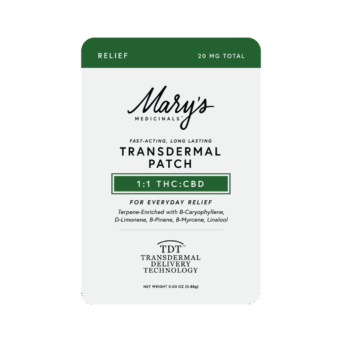
Mary’s is known for transdermal delivery because it’s designed for consistent, controlled release. Our patches are built to go 7 to 10 layers deep, delivering cannabinoids through the skin and into the bloodstream. That’s part of why many people can use a lower dose and still feel supported.
In case you want a refresher: Bioavailability is the proportion of a drug or other substance which enters the circulation when introduced into the body and then has an active effect. Higher bioavailability can mean less product needed to reach the same desired effect.
If you want the bigger picture on cannabinoids, receptors, and how different formats behave, explore the Mary’s Medicinals Learn library on cannabinoids, receptors, and bioavailability.
Where CBG fits into the Mary’s approach
We’re not in the business of chasing one “miracle cannabinoid.” We’re here for targeted formulas, accurate dosing, and delivery methods you can actually stick with when life is busy.
If CBG is on your radar, shop with a simple checklist in mind: clear cannabinoid amounts per serving, transparent testing, and a format that matches your schedule. If you want to explore what’s available across formats, browse Mary’s Medicinals Shop All products.
If you ever feel like a label is vague about what’s in the product or how much you’re getting, take that as your cue to pause. In cannabis wellness, transparency is not a bonus feature. It’s the baseline.
CBG safety notes: what to keep in mind
CBG is widely considered non-intoxicating, but non-intoxicating does not mean risk-free. The FDA has not evaluated CBG for safety or efficacy, and long-term data across diverse groups is still limited.
Side effects reported across cannabinoid products can include fatigue, digestive upset, or changes in appetite, and sensitivity varies a lot person to person. If you’re pregnant or breastfeeding, managing a serious health condition, or taking medications, check in with a clinician first. For a conservative overview of cautions and potential interactions, see WebMD’s overview of cannabigerol (CBG), including side effects and interactions.
FAQ: CBG (cannabigerol) for daytime balance
Is CBG the same thing as CBD?
No. CBG and CBD are different cannabinoids and they can feel different in the body. CBD is often associated with winding down, while CBG is more often described as clear-headed and compatible with daytime tasks.
Will CBG get you high?
CBG is generally considered non-intoxicating and typically does not produce a THC-like high. Your experience can still depend on the product’s overall cannabinoid profile and your personal sensitivity.
What are the most talked-about CBG benefits?
The big three you’ll hear are daytime calm, stress support, and CBG focus. Early human research suggests anxiety reduction without cognitive impairment at certain doses, but results vary and the research is still developing.
How much CBG should you start with?
Many people start around 10 to 25 mg, then adjust gradually. If you tend to be sensitive to supplements or cannabinoids, start closer to the low end and keep your routine consistent for a few days before changing anything.
Can you take CBG and CBD together?
Many people do, especially when they want calm without sleepiness. If you’re troubleshooting your ideal routine, introduce one new variable at a time so you can tell what’s actually helping.
Conclusion: Is CBG worth trying for daytime balance?
If you want a clearer, calmer daytime baseline, CBG (cannabigerol) is worth getting to know. It’s a “minor cannabinoid” with a major role in cannabis chemistry, and early human evidence lines up with what many people report: steady support without the mental fog they associate with THC or higher doses of CBD.
If you want help choosing a format or building a routine that fits your day, reach out through Mary’s Medicinals customer care. We’ll talk it through like a real conversation, because that’s how this stuff gets figured out.